You've probably never heard of Schick, but I bet your grandfather did.
In the 1920s, Jacob Schick introduced the magazine repeating safety razor. These were the original cartridges that we still use today. In the world of shaving, I imagine this was a big deal. Guys no longer had to take their lives into their own hands and/or spend an hour (it must have taken at least an hour) with a straight razor.
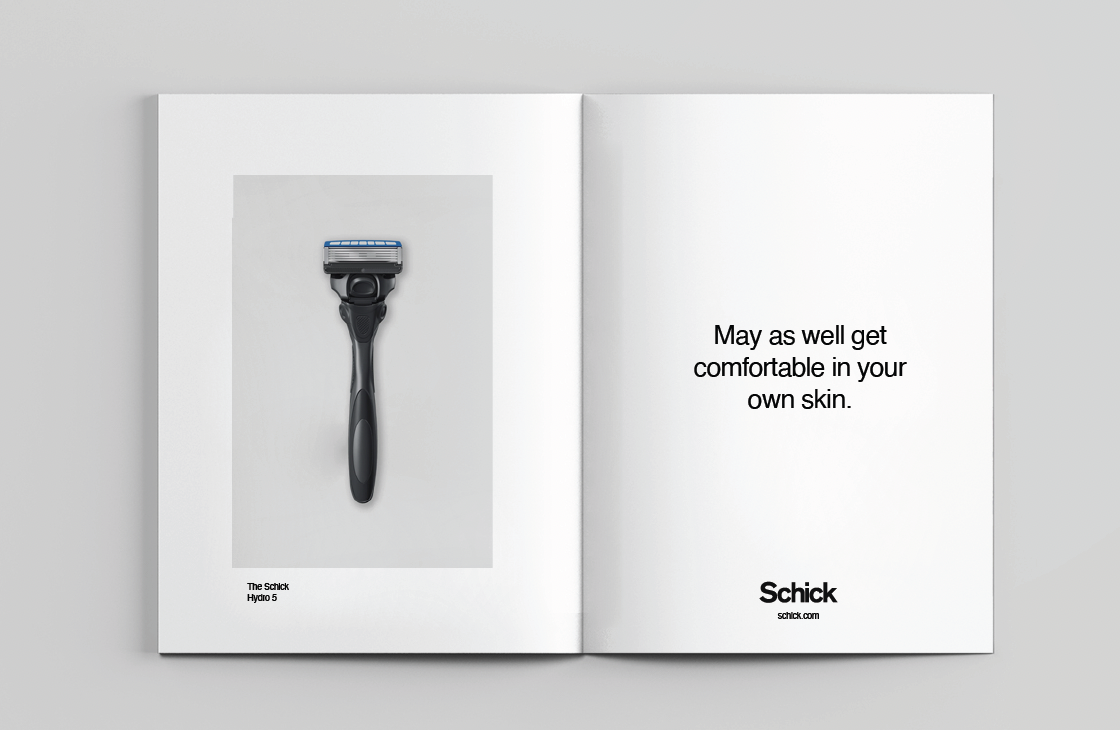
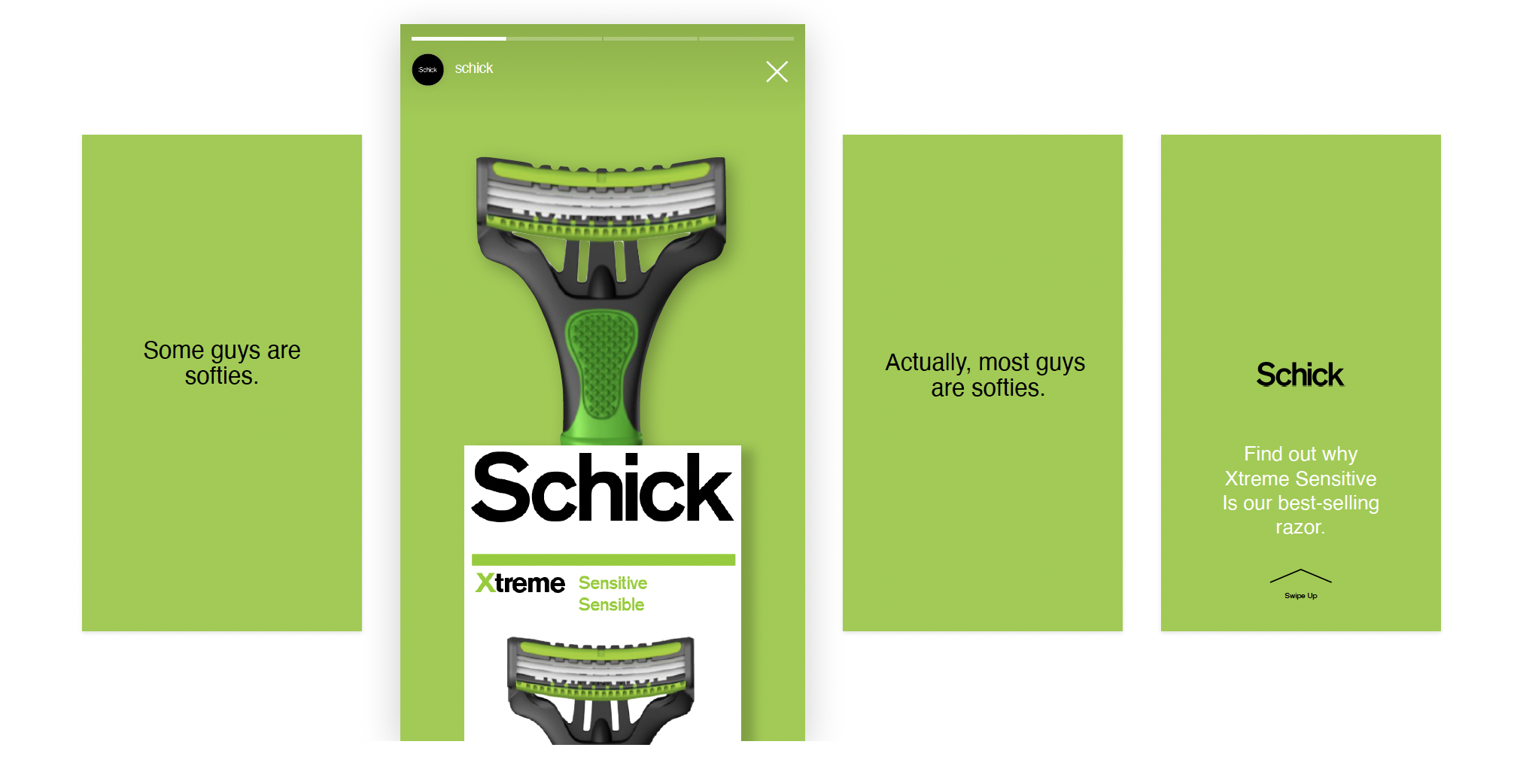
Fast forward a century. Schick hadn't gone anywhere but it might as well have. They still made some of the best cartridge razors on the market, but it's hard competing for eyes on shelf spaces where the products look all the same.
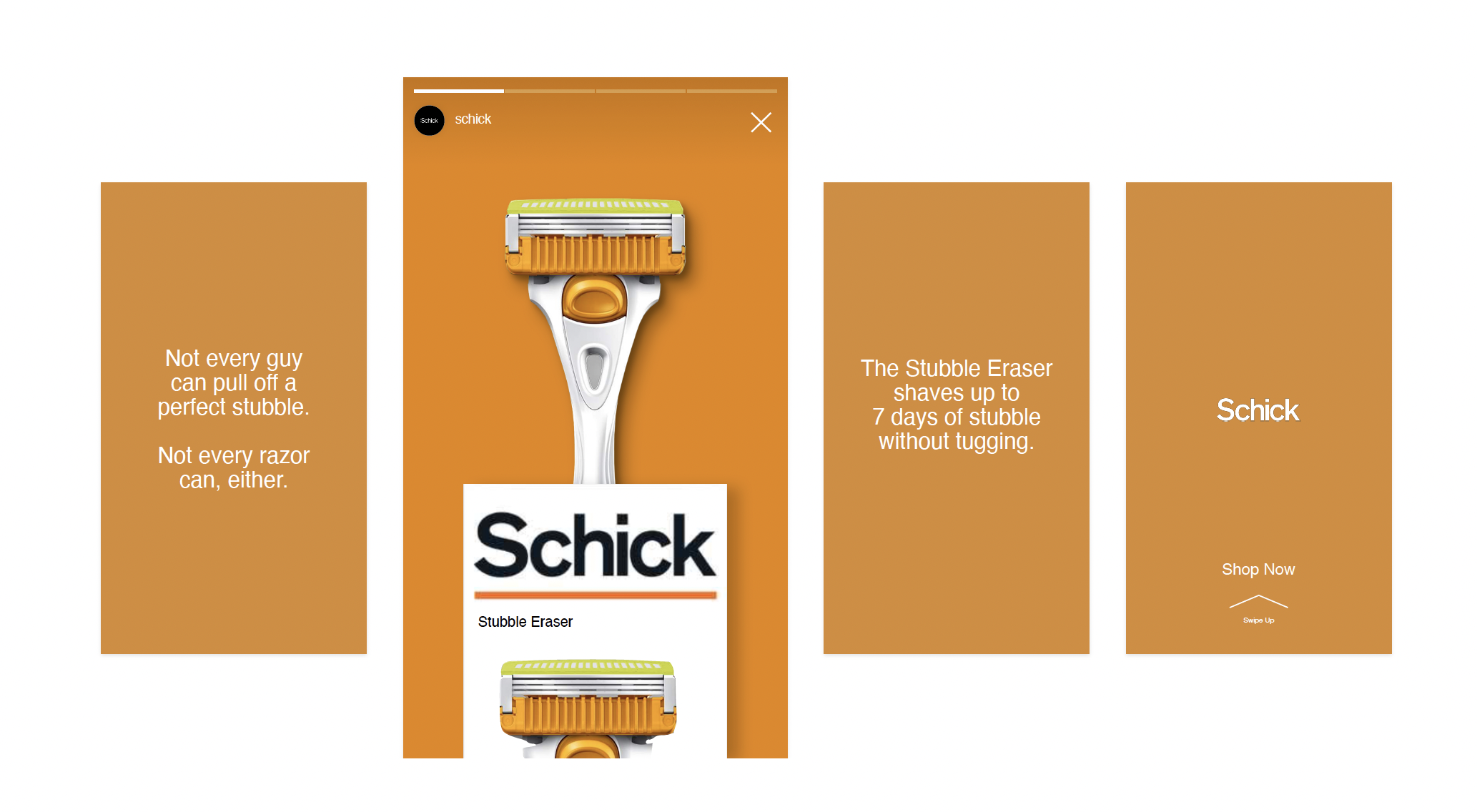
It was more than sameness, though. Branding in the razor trumpets all the hyper-masculine cues we think dudes will love. Black packaging, Monster Energy-like neon colors. Then you've got new-ish brands like Harry's who are trying to do that minimalist design-forward thing that sort of looks like it's trying to embrace the past. But in reality it just looks like all the other brands trying to do the minimalist thing. You get the picture.
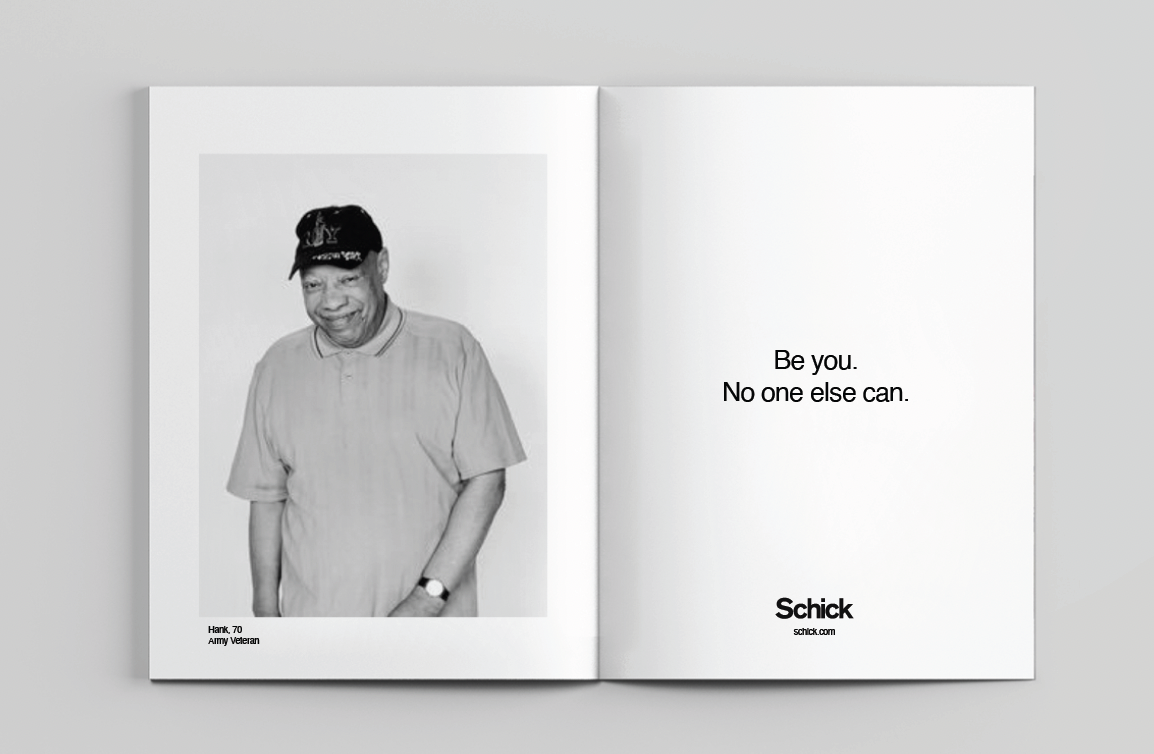
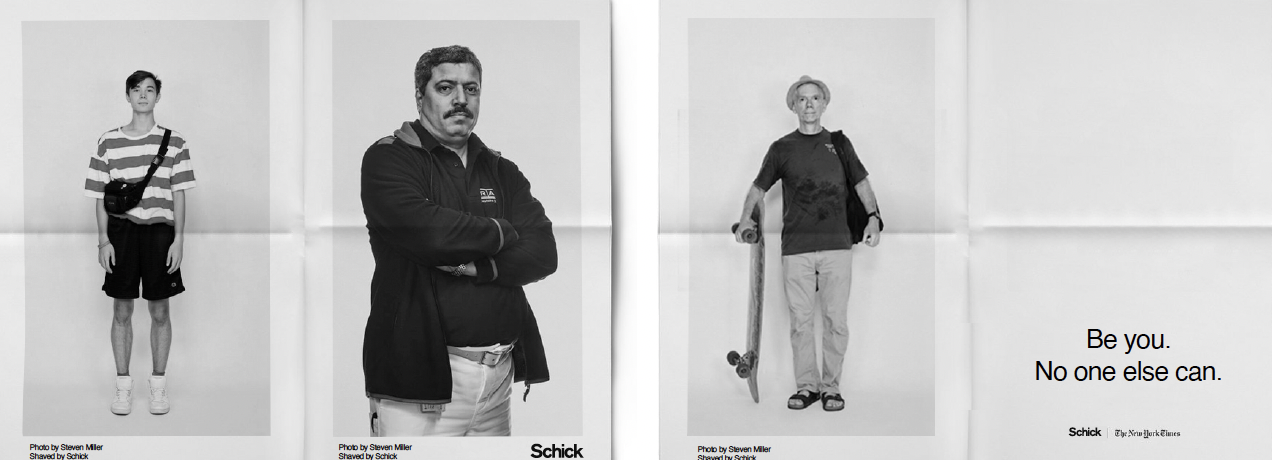
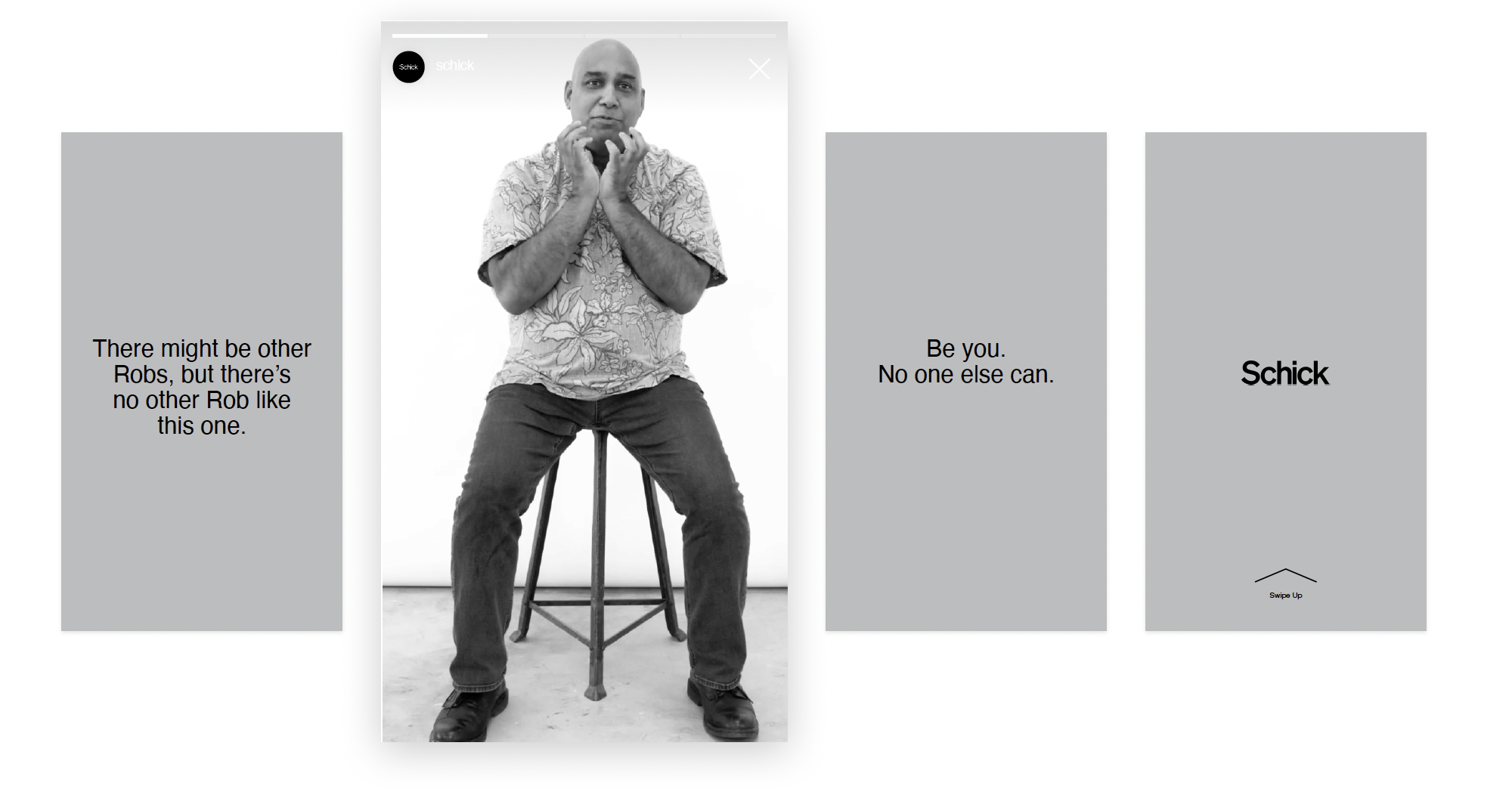
Be you. No one else can.
Schick needed to stand out with a new voice. But we didn't want to reinvent the brand. There was heritage there. An old-school ethos. A timelessness that the best fathers and grandfathers on earth have. We didn't want to throw that away.
Our anchoring line became clear the more we thought about it. Instead of encouraging people to be the dude on the packaging or, in Harry's case, nobody at all. Let's remind them that there's only one you. Might as well embrace it.
People are timeless.
As a bearded man, I know, firsthand, that there's a particular uniqueness that comes with facial hair – and a sense of identity men derive from it. I can't help but believe it must have always been this way after looking at old Civil War photographs full of mutton chops and General Burnsides.
A timeless brand needs to adopt the ethos of the only truly timeless ambassadors: actual people. So we found real dudes. Then we told their stories through the lens of their facial hair.
There's always a fundamental truth.
I hate what I'm about to write because I can't stand when we try to make brands seem like they're people – but the one parallel I'll draw (or attempt to) – is that like people, there's a fundamental truth and ethos behind the great ones. When we try to put the cart before the horse, we end up with great design but also a brand like Harry's that looks like it was cooked up in a lab somewhere. Worse, we get the tropey, clichéd look that tends to dominate the CPG market.